Author name: Rayans creative

digital marketing trends 2026-rayans creative
Digital Marketing

15 Latest Digital Marketing Trends in 2026 That Every Marketer Should Know

15 Latest Digital Marketing Trends in 2026 That Every Marketer Should Know The world of digital marketing is always changing. Strategies that worked a couple of years ago may not work as effectively now. With the fast growth in Artificial Intelligence (AI), changes in consumer behaviour, and increased popularity of social media, it is important for companies to keep up with the modern marketing trends. Digital marketing in 2026 is becoming smarter, personal, automated and customer orientated. With AI marketing, Generative Engine Optimisation (GEO), short form video and Social Commerce becoming more popular there are more ways than ever for marketers to connect with their target audience. If you are a business owner, digital marketer, SEO expert or content creator, you will benefit from knowing what changes are happening. Let’s take a look at the 15 latest digital marketing trends in 2026 to be aware of as a marketer. 1. AI-Powered Digital Marketing Artificial Intelligence has become an important part of modern digital marketing. Businesses and marketing professionals are using AI tools to improve productivity, understand customer behaviour, and create marketing campaigns more efficiently. AI can help marketers with:  Generating blog topics and content ideas.  Creating social media captions and advertisements.  Analysing customer behaviour.  Automating repetitive marketing tasks.  Creating marketing reports.  Improving audience targeting. Popular AI tools such as ChatGPT, Gemini, Claude, and Canva AI are helping marketers simplify their daily activities.However, AI should support human creativity and strategic thinking rather than completely replace them. 2. Answer Engine Optimization (AEO) and Generative Engine Optimization (GEO) Traditional SEO aims to increase visibility in search engines. However, with new AI-based systems like ChatGPT, Google AI Overviews and Perplexity. People are using more AI tools to get direct answers. As a result there has been an increasing interest in optimising for: Answer Engines (AEO) – providing clear answers. Generative Engines (GEO) – increasing your brand visibility and likelihood of being mentioned. To improve your visibility in AI search you should: Create useful and unique content. Answer specific questions. Showcase your expertise and authority. Use clear headings and appropriate schema. Build your brand authority with relevant mentions and digital PR. Ensure your key business information is accurate. The future of search marketing requires knowledge of traditional search engines and AI based discovery platforms. for more: Beyond SEO: How to Optimise Your Website for People, Search & AI 3. Short-Form Video Marketing Short-form videos continue to play an important role in digital marketing. Platforms such as Instagram Reels, YouTube Shorts, and Facebook Reels allow brands to reach audiences through engaging and easily consumable content. Businesses use short videos to introduce products, explain services, share customer experiences, and increase brand awareness. Popular short-form video ideas include:  Product demonstrations.  Behind-the-scenes videos.  Educational tips and tutorials.  Before-and-after videos.  Customer testimonials.  Trending challenges. For small businesses, short-form videos provide an opportunity to showcase products and services without requiring expensive advertising campaigns. For more about this: The Rise of Short-Form Video: How Businesses Can Use Reels & Shorts Effectively 4. Influencer and Micro-Influencer Marketing Influencer marketing is becoming an important strategy for brands looking to connect with specific audiences. Instead of collaborating only with celebrities and large influencers, businesses are increasingly exploring partnerships with micro-influencers who have smaller but more focused communities. Micro-influencers can help businesses reach niche audiences through product reviews, tutorials, recommendations, and authentic experiences. For example, a beauty salon can collaborate with a local beauty creator to showcase its services and attract potential customers. The right influencer partnership should focus on audience relevance, engagement, credibility, and campaign objectives rather than follower count alone. 5. Social SEO: Social Media as a Search Engine Social media is an important way to find new businesses, products, services and recommendations. Instagram, YouTube, and Pinterest all help with discovery. You may search for: Best Digital Marketing Agency Kannur Best Skincare Products for Oily Skin Cheap Wedding Photographer Best Restaurants Near Me By including relevant keywords in your profile description, captions, video titles and on-screen text you can boost your social media discoverability. Social SEO can boost your brands visibility when potential customers search for your brand directly on the social media platform. 6. Conversational Marketing and WhatsApp Business Customers are favouring instant and easy communication. Using conversational marketing, businesses can engage with potential customers using messaging platforms, chatbots and automation. WhatsApp Business has been very useful for businesses within India. Common uses for WhatsApp Business include: Automated responses Product Catalogue Booking Appointments Customer Support Lead Generation Follow Ups A digital marketing agency could create a Click to WhatsApp advert to encourage people to get in direct contact with their business. This helps to reduce any barriers between the two parties and makes it an easy process for customers. 7. Hyper-Personalization in Marketing Modern customers expect relevant experiences rather than generic promotional messages. Hyper-personalization uses customer preferences, behaviour, and available data to deliver more relevant marketing communication. Examples include personalized email campaigns, product recommendations, location-based offers, and customized advertisements. For example, an online clothing store can recommend products based on a customer’s previous browsing or purchase behaviour. Personalization helps businesses improve customer engagement and create stronger relationships with their audiences. 8. User-Generated Content (UGC) User-Generated Content refers to content created by customers rather than directly by brands. It includes customer reviews, testimonials, product photographs, unboxing videos, and personal experiences. UGC is valuable because potential customers often look for real experiences before making purchasing decisions. Businesses can encourage customers to share their experiences and feature suitable content on their websites and social media platforms, with appropriate permission. This helps build social proof, trust, and brand credibility. 9. AI-Generated Videos and Creative Content AI is transforming how marketers create visual content. Earlier, producing professional advertisements and promotional videos often required considerable time, resources, and technical skills. Today, AI-powered tools are making creative production more accessible. Popular applications include: AI-generated product advertisements.  Animated promotional videos.  AI voiceovers.  Virtual presenters and avatars.  Automated video editing.  Creative variations for advertising campaigns. Tools such as Runway, Kling AI,

Rayans creative graphic design poster showing how graphic design helps small businesses build a strong brand identity.
Digital Marketing

How Graphic Design Helps Small Businesses Build a Strong Brand Identity

How Graphic Design Helps Small Businesses Build a Strong Brand Identity In today’s competitive market, it can be difficult to stand out and shine with just a great product or service. With customers taking note of how your business looks, from your logo and website, social media posts and packaging it all adds up to help shape how people see your brand.This is where Graphic Design comes in!Small business Graphic Design is used to help convey your brand message. This can be done through the use of colour schemes, fonts, layout and imagery. When everything works together it helps build a recognisable brand and allows your business to look more professional.If you have a small retail shop, start-up, restaurant or service based company investing in considered Graphic Design will help create a strong brand identity.In this article we will look at how Graphic Design can help your business branding! What Is Graphic Design in Branding? Graphic design in branding is the process of using visual elements to communicate a business’s identity, values andpersonality.It includes several elements, such as:  Logo design: A visual mark that identifies your business. Colour palette: A set of colours used consistently across brand materials.  Typography: Fonts and text styles that establish a visual character.  Marketing materials: Posters, brochures, advertisements and promotional creatives. Social media graphics: Visual content that maintains a consistent brand appearance online.  Packaging and stationery: Physical brand materials that customers interact with. Together, these elements contribute to a brand identity that customers can recognise across different platforms. 7 Ways Graphic Design Helps Small Businesses Build a Strong Brand Identity 1. Creates a Recognisable Brand Identity Brand recognition develops when customers repeatedly encounter consistent visual elements associated with a business.A distinctive logo, consistent colours and recognisable typography can help customers identify your business across your website, social media profiles, advertisements and printed materials.For example, a jewellery business might use an elegant typography style, a carefully selected colour palette and consistent product photography across its marketing channels.Over time, using these elements consistently can help create a recognisable visual identity.Why it matters: Small businesses need to establish a clear identity that customers can associate with their productsand services. 2. Builds a Professional Business Image First impressions can influence how potential customers perceive a business.A website with inconsistent fonts, poorly aligned layouts or low-quality graphics may appear less professional. In contrast, well-organised visual content can make information easier to understand and give the business a more consistent appearance.Professional graphic design helps businesses present their services clearly through: Well-structured promotional posters. Readable typography and balanced layouts.  High-quality product images.  Consistent business presentations.  Professional brochures and marketing materials. Good design does not guarantee customer trust, but it can support a more credible and professional presentation. 3. Maintains Consistency Across Marketing Channels Customers may discover your business through Google, Instagram, Facebook, your website or printed advertisements. If every platform uses different colours, fonts and visual styles, customers may find it harder to connect those communications with the same brand. A consistent visual identity helps create a unified experience.For example, a restaurant can use the same brand colours and typography across its menu, social media posts,promotional offers, website and takeaway packaging.A simple brand guideline document can help maintain consistency as the business grows. 4. Makes Social Media Content More Effective Social media is an important communication channel for many small businesses. However, publishing content regularly is only one part of an effective strategy. The content also needs to communicate the message clearly.Graphic design helps businesses create: Promotional posts and offer announcements. Product showcases. Educational carousels. Event announcements. Infographics and informative graphics.  Consistent templates for recurring content. A well-designed social media post uses visual hierarchy to guide attention towards the most important information.For instance, a promotional poster should make the offer, product and call to action easy to identify without overcrowding the design.Remember that effective social media performance also depends on the quality of the offer,audience relevance,content strategy and distribution. 5. Helps Businesses Stand Out From Competitors In crowded markets, businesses often offer similar products or services. A clear visual identity can helpcommunicate what makes one business different.Consider two clothing boutiques selling similar products. One uses inconsistent promotional designs, while the othermaintains a distinctive visual style across its product photography, packaging and social media content.The second boutique may create a more coherent brand experience.Graphic design can support differentiation through:  A distinctive visual direction. Consistent product presentation. Brand-specific colours and typography. Creative campaign concepts.  Packaging that reflects the brand’s positioning. The objective is not simply to look different. It is to communicate the right personality and value to the intended audience. 6. Improves Marketing Communication Customers should be able to understand the purpose of a marketing message quickly.Poorly organised graphics can make important information difficult to find. Too many fonts, excessive text, low contrast and unnecessary decorative elements can distract from the main message.Graphic design uses visual hierarchy, spacing, contrast and alignment to organise information.For example, an educational institution advertising a new course should clearly present the course name, key benefits, admission information and contact details.When information is organised logically, customers can understand the message more easily and identify the next step. 7. Supports Business Growth Across Different Touchpoints As a small business expands, its visual communication needs may increase. It might introduce new products, launch a website, advertise on social media or open another location.A well-defined brand identity provides a foundation for these activities.Businesses can extend their visual identity across: Websites and landing pages.  Digital advertising campaigns. Business presentations. Product packaging. Printed promotional materials. Event branding. Email marketing graphics. This creates a more consistent brand experience as the business develops.Although graphic design can support marketing and communication, actual business growth also depends on factors such as product quality, customer service, pricing, demand and sales strategy. Essential Graphic Design Elements Every Small Business Needs Here are some useful design essentials.1. A professional logoYour logo should be suitable for different sizes and applications, including websites, social media profiles, packagingand printed materials.2. A consistent colour

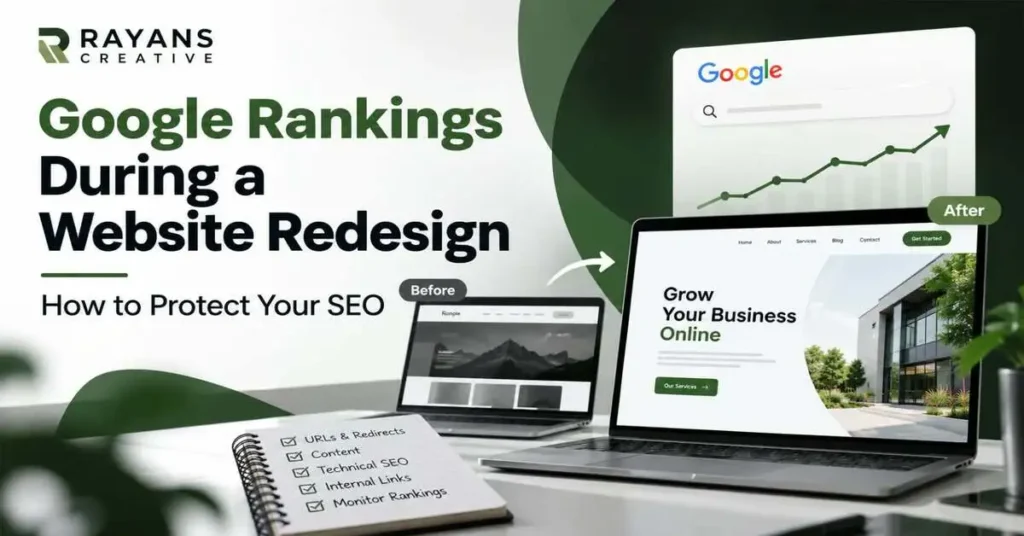
google ranking during a website redesign with SEO optimization checklist
SEO & Local SEO, Uncategorized

Google Rankings During a Website Redesign: How to Protect Your SEO

Google Rankings During a Website Redesign: How to Protect Your SEO A website redesign can boost your brand image, increase user satisfaction rates, improve the website performance, and raise conversions. However, a website redesign can hurt the existing Google rankings and traffic if not executed correctly. Many companies tend to overlook the existing value of their website and the benefits they can bring to their new website. The website redesign process alters URLs, content, internal linking structure, and hosting settings in a way that search engines might not be able to properly understand the new website structure. Website redesign does not have to hurt your website’s rankings if executed correctly. A professional website redesign should be performed with care, technical expertise, and post-launch optimization. In this blog, Rayans Creative talks about how to secure website rankings during a redesign. Does a Website Redesign Affect Google Rankings? Yes, a website redesign can affect Google rankings, but the impact depends on the changes made during the process. A redesign that improves mobile usability, page speed, navigation, and content accessibility may support a better user experience. However, removing important content, changing URLs without redirects, or accidentally blocking search engines can cause ranking and traffic fluctuations. For example, imagine a business website that ranks well for several valuable keywords. During a redesign, its service pages are removed or their URLs are changed without proper redirects. Google may struggle to identify the new destinations, and users following old links may encounter errors. This is why SEO should be part of the redesign process from the beginning, rather than something added after the new website goes live. Why Do Google Rankings Drop After a Website Redesign? Understanding the common causes of ranking fluctuations helps you prevent avoidable SEO problems. 1. Changing Website URLs Without Redirects Here URLs are the backbone of search engines, and their proper use helps increase the relevance of both web surfers and search engines. With that said, if you change the URL of a page that already has backlinks pointing to it, you will need to make sure to redirect these links to the new address.An example of such a scenario may be seen below: Old URL: “example. com/ digital- marketing- services/” New URL: “example. com/ marketing- services/” Note: Should you change the URL, it is essential to redirect it with a permanent 301 redirect to the most relevant page. Before making the switch, it may be helpful to devise a spreadsheet with all of the existing URLs, their replacements, and the redirect rules. 2. Removing Valuable Website Content During a redesign, businesses sometimes shorten their service pages or remove blog posts to achieve a cleaner appearance. However, existing content may attract organic traffic, earn backlinks, answer customer questions, and help Google understand a page’s relevance. Before removing or rewriting content, review its organic traffic, ranking keywords, backlinks, conversions, and business value. Preserve useful information and improve weak content instead of removing it without analysis. 3. Changing Important Headings and Metadata Your title tags, meta descriptions, headings, and page content help communicate the purpose of each page. If a redesign removes relevant headings or changes a page’s main topic, its search performance may change. Review your existing SEO titles, meta descriptions, H1 headings, and target keywords before launch. Update them when necessary, but avoid changing high-performing content without a clear reason. 4. Technical SEO Problems A redesigned website may introduce technical issues that prevent Google from crawling or indexing important pages. Common problems include: – Accidental “noindex” directives. – Incorrect canonical tags. – Blocked pages in robots.txt. – Broken internal links. – Missing XML sitemap entries. – Redirect chains and redirect loops. – Pages returning 404 errors. Test these elements before launch and repeat the checks after the website becomes publicly accessible. 5. Website Speed and Mobile Usability Changes A new design can introduce large images, unnecessary scripts, animations, or additional plugins. These elements may affect loading performance and Core Web Vitals. Optimize images, use efficient caching, reduce unnecessary scripts, and test key pages on mobile devices. A visually attractive website should also be fast, accessible, and easy to navigate. How to Protect Google Rankings Before a Website Redesign Preparation is one of the most important stages of an SEO-friendly redesign. Step 1: Record Your Existing SEO Performance Before making changes, establish a baseline for comparison. Use Google Search Console to review: – Organic clicks and impressions. – Average position for important search queries. – Pages receiving the most organic traffic. – Search queries generating business enquiries. – Indexing issues and crawl-related reports. Use Google Analytics 4 to review organic sessions, engagement, and conversions. If available, also record backlink information and technical audit results. Save these reports before the redesign so you can compare performance after launch. Step 2: Crawl Your Existing Website Use a website crawler such as Screaming Frog SEO Spider to identify the pages and technical elements that need to be preserved. Record important information, including: – Existing URLs and HTTP status codes. – Page titles and meta descriptions. – H1 headings. – Canonical URLs. – Internal links. – Indexability status. – Images and important resources. This crawl provides a reference for checking whether the redesigned website retains its important SEO elements. Step 3: Protect High-Performing Pages Identify the pages that contribute the most to your organic visibility and business results. These might include service pages, location-specific landing pages, blog posts, and pages that receive valuable backlinks. Keep their purpose, useful content, and relevant internal links intact wherever possible. If a page needs a major change, plan and test that change carefully. Step 4: Prepare a Redirect Map If URLs will change, create a spreadsheet mapping every affected old URL to its most relevant new destination. Use 301 redirects for permanent URL changes. Avoid redirecting every old page to the homepage when a relevant replacement exists, because an unrelated destination may not preserve the original page’s purpose. Check the redirect map before launch and test the redirects after

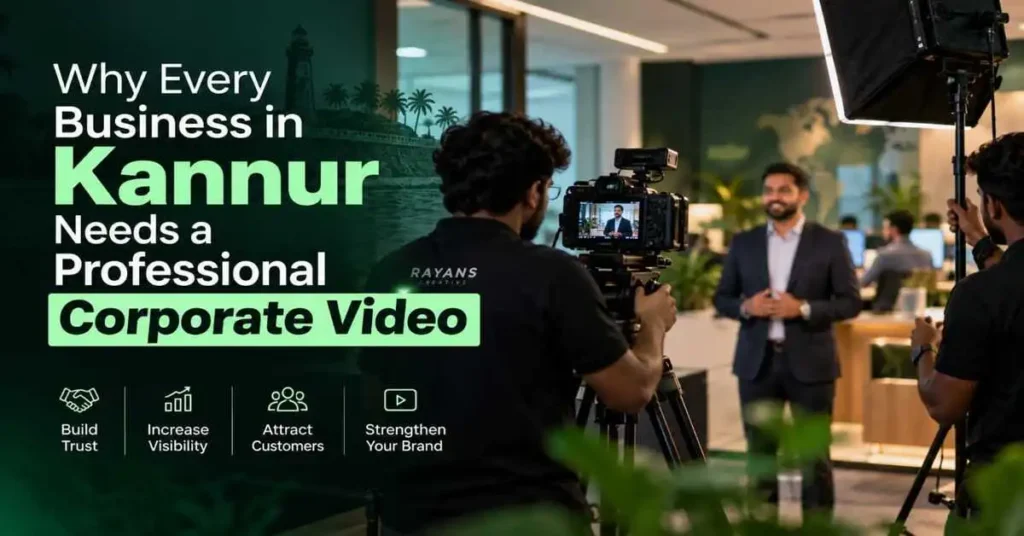
professional corporate video production for businesses in kannur
Digital Marketing Agency in Kannur, Uncategorized

Why Every Business in Kannur Needs a Professional Corporate Video

Why Every Business in Kannur Needs a Professional Corporate Video In today’s competitive business scenario, it is no longer enough to have a website or a social media page that houses your brand. Businesses must now work harder to gain customer trust and provide them with the necessary information that encourages them to choose their product or service over others. This is where a professional corporate video makes all the difference. From big brands and manufacturers to clinics and medical services, educational institutions, retail shops, and even small-scale businesses, corporate videos help these business entities get their brand out there. For businesses based in kannur looking to establish a foothold in their respective markets where the competition is stiff and customers are turning to the online space more and more, a corporate video can be a great way to stand out. But what makes it so special? Why do businesses need it? Why now? Let’s delve into the details. What Is a Corporate Video? A corporate video is a professional video that presents the company, its qualities, services, products, achievements, and activities. Unlike a regular promotional reel, it allows you to effectively convey to the audience more about the business you represent. For example, you can show your office space, talk with your employees, describe your products and services, tell about your achievements and expertise, and highlight your unique selling points. These kinds of videos can be used both on the company website and in social media accounts. They can also be used in slides, digital ads, and business presentations. 7 Reasons Why  Every Business in Kannur Needs a Professional Corporate Video 1. Build Trust and Credibility Trust is essential in influencing customers’ purchasing behavior. A potential buyer should do a background check on the business in order to ascertain who created the product or service and if the company is able to meet the promise. A corporate video can help customers become acquainted with the business’s work environment, workers, product, and other features. For instance, a manufacturing company in Kannur may use corporate videos to display their production line and another health organization may use the corporate video to show their working environment and personnel. This will be helpful in providing the potential buyers with the necessary information required about the business or product and offer avenues to build trust and credibility. 2. Make Yourself Different From The Competitors Kannur is home to businesses belonging to a diverse range of industries like retail, hospitality, healthcare, education, construction, manufacturing, and professional services. Within these industries, there are plenty of similar businesses offering almost a similar set of products or services. It becomes crucial to distinguish the business you are in from others. You might want to narrate your story through the lens of your corporate video production services, Kannur, which can help your business connect to the customers on a much deeper level. Instead of merely talking about being different from competitors, talk about the qualities that distinguish your business from others. 3. Better First Impression For The Website The website is the first point of interaction between the business and the customer. If the customer has landed on the website through a Google search or any other organic means, there is a fair chance they have reached the right place. A corporate video on your website’s homepage or on the About page will give the website visitor an idea about your business at a glance. A well-made corporate video can enhance the website’s user experience. It has the potential to make the website’s data understandable and compelling. But, the video should not hamper the website’s performance in terms of higher rankings on SERPs and lesser bounce rates. You might want to avoid hosting large video content that can hurt the website’s performance if the video is not optimized properly. 4. Reach More Customers Through Social Media Social media platforms have made videos a significant way of communicating. Companies in Kannur can use corporate video content to create different social media-friendly pieces like Instagram Reels, Facebook, YouTube Shorts, LinkedIn, etc. For instance, one corporate video can provide several opportunities for creating social media content, including a company intro behind-the-scenes employee intro product/service customer testimonial short advertisement. This way, companies can double their effort in brand-building while getting more out of their video investment. 5. Showcase Your Products, Services, and Expertise Sometimes, it can be hard to describe or depict what you do in words, photos, or images. However, a corporate video can help you show customers how your business does what it does, how its products are produced, how the service is delivered, and how the company tackles a specific project. For instance, with a corporate video, a construction company can show its projects and how it does its work, and a hotel can display its rooms. Manufacturers can display their products, how they are made, and the facilities where they are produced. This allows the company to help the customers understand what the business offers and how it operates. 6. Support digital marketing and lead generation Your corporate video fits right into a digital marketing strategy. You can use it in Google Ads and social media, share it through email marketing, post it on landing pages, put it into sales presentations. If it conveys a strong value proposition and call to action, it can help drive website traffic, qualified leads, and even sales, after being shared through email, on social media, and embedded into web pages. For local companies, investing in video content marketing along with Google Ads and well-optimized service pages could provide a nice boost. Keep in mind that video cannot magically drive sales; it has to find the right audiences and deliver the right message, in the right channels, with the right offer, and proper follow-up. 7. Build a strong brand A recognizable brand requires a strong and well-defined personality. Your corporate video builds brand equity by bringing the brand to life through visual storytelling,

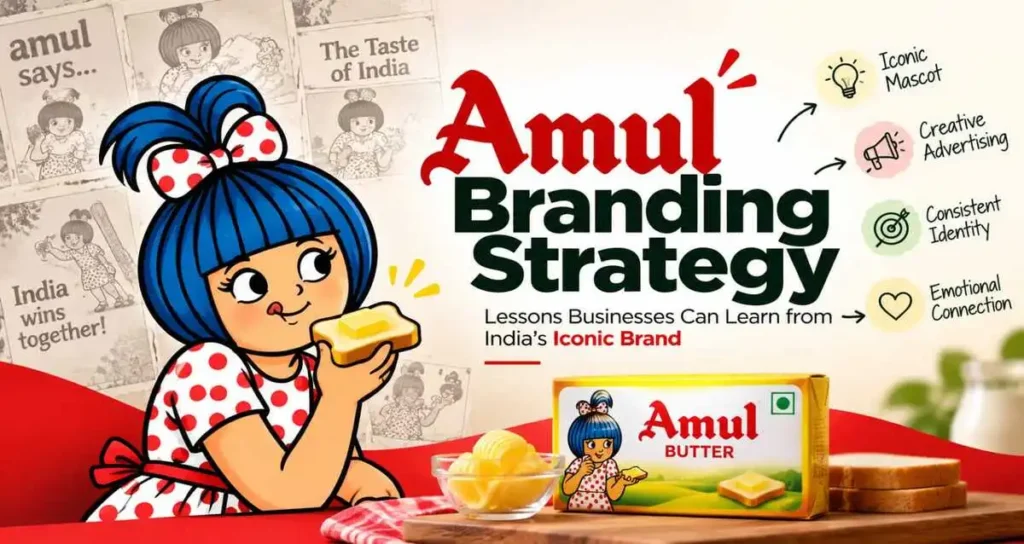
amul branding strategy and lessons in brand marketing
Digital Marketing, Uncategorized

Amul Branding Strategy: Lessons Businesses Can Learn from India’s Iconic Brand

Amul Branding Strategy: Lessons Businesses Can Learn from India’s Iconic Brand There are brands that sell products and there are brands that integrate themselves into people’s daily lives. The former applies to brands like Amul, which have made a mark with their distinct butter packs and humorous advertisements with the famous Amul girl. The achievements of the Amul brand go beyond just the dairy products category. It has much to do with branding, storytelling, culture, and trust of customers in the long run. In the highly competitive environment where firms compete for customers’ attention all the time, Amul shows how important it is to have a good brand identity and marketing strategy to be successful. Let us analyze the Amul brand strategy and useful insights that other businesses can derive from it. What Is Amul’s Branding Strategy? Amul’s branding strategy is based on building a recognisable identity through consistent visual elements, relatable advertising, memorable messaging and strong connection with Indian consumers. Familiar packaging, accessible communication, humour and topical advertising keep the brand relevant to its audience. Instead of merely pushing its products, Amul often links its messaging to current events, popular culture and day-to-day life. This strategy helps Amul to connect with different generations of consumers and at the same time, retain the brand recognition. What Makes Amul’s Branding Strategy So Successful? Amul’s branding success comes from several elements working together. Its consistent identity makes the brand easy to recognise, while its creative advertising keeps audiences interested. The Power of the Amul Girl One of the most recognisable elements of Amul’s branding is the Amul Girl, the cartoon mascot associated with its famous butter advertisements.Introduced in 1966, the Amul Girl became a distinctive part of the brand’s identity. Her playful appearance, blue hair, red polka-dot dress, and witty comments make the advertisements memorable. The character also gives Amul a recognisable voice. Instead of using conventional product advertisements every time, the brand often uses humour and topical references to communicate with its audience. Branding lesson: A memorable mascot, character, or visual element can help a business build a distinctive identity. Small businesses can develop a consistent brand personality that customers recognise across websites, advertisements, and social media platforms. Consistent Brand Identity Amul maintains a familiar visual identity across its products and advertising. Its well-known logo, packaging, colours, and typography help customers recognise the brand quickly. Consistency is important because customers encounter brands through multiple touchpoints, including product packaging, retail displays, advertisements, and digital platforms. When a business uses the same visual elements and tone of voice consistently, it becomes easier for customers to remember and identify that business. Branding lesson: Businesses should establish clear brand guidelines covering their logo, colours, fonts, imagery, and communication style. Consistency across marketing channels helps create a professional and recognisable brand. Topical Advertising and Real-Time Marketing Amul is widely known for its topical advertisements, which creatively respond to current events, sports, entertainment, and social conversations. These advertisements often combine humour, wordplay, and the familiar Amul Girl character to connect the brand with topics people are already discussing. This approach demonstrates how advertising can become more than a product promotion. It can also create conversations and encourage people to engage with a brand. However, successful topical marketing requires good timing, creativity, and sensitivity to the subject being discussed. Branding lesson: Businesses can use relevant trends, festivals, industry news, and audience interests to create timely content. The key is to choose topics that fit the brand instead of following every trend. Emotional Branding and Cultural Connection Amul has built a strong connection with Indian consumers by making its brand part of everyday food habits, family experiences, and familiar cultural moments. Its advertisements often use relatable situations and humour rather than focusing exclusively on product features. This makes the communication accessible to a broad audience. Emotional branding helps customers associate a product with experiences, memories, and feelings. Over time, these associations can contribute to trust and brand loyalty. Branding lesson: Businesses should understand what matters to their target audience. Content that reflects customers’ needs, values, and everyday experiences can create a stronger connection than advertisements focused only on selling. Simple and Memorable Messaging Amul’s topical advertisements are known for short, witty lines that connect a current event with the brand. Simple messaging is powerful because people often encounter advertising while scrolling through social media, browsing websites, or moving through their daily routines. A message that is easy to understand and remember has a better chance of making an impression.   Branding lesson: Businesses should communicate their value clearly. Instead of using complicated marketing language, focus on a simple message that explains what the business offers and why it matters to customers. Staying Relevant While Maintaining Brand Identity Marketing trends and consumer preferences change constantly. Amul demonstrates how a brand can respond to changing conversations while retaining familiar elements of its identity. The Amul Girl, the brand’s established visual style, and its distinctive use of humour provide continuity, even when individual advertisements address different topics. This balance between consistency and adaptation is important for long-term branding. Branding lesson: Businesses should update their content and marketing methods as audiences change, while maintaining the core elements that make their brand recognisable.   Key Elements of Amul’s Branding Strategy at a Glance Branding elements How amul uses it Lesson for businesses Brand identity Familiar logo,packaging and mascot Maintain consistent visual branding story telling Humorous and relatable advertisement. Make content interesting and memorable. Real time marketing Topical advertisement Respond to relevant trends and events Emotional connection Familier cultural and everyday references Understand your audiences Brand personality Witty and distinctive communication Develop a consistent tone of voice Long tern consistency Repeated use of recognisable brand elements Build recognition overtime How Small Businesses Can Apply Amul’s Branding Strategy Amul’s branding strategies are applicable not only among giants but also small companies, start-ups, and local brands managed to create remarkable images within their limited budgets. There are six essential strategies that might be implemented by an

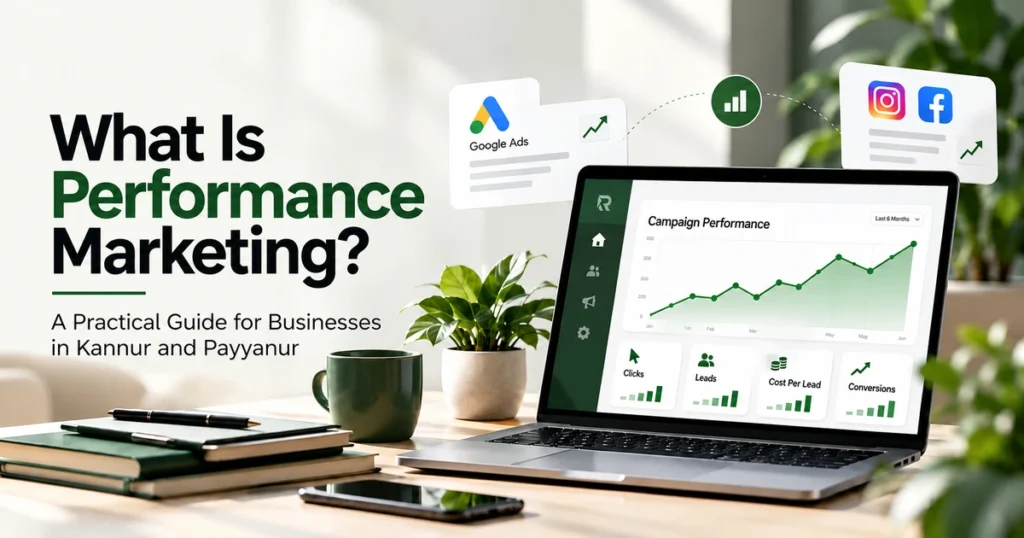
Performance marketing dashboard showing campaign analytics, Google Ads, and social media advertising results
Performance Marketing

What Is Performance Marketing?

What Is Performance Marketing? A Guide for Businesses in Kannur and Payyanur Businesses today need more than website traffic, social media likes and advertising clicks. They need enquiries, qualified leads and measurable business opportunities. For businesses in Kannur and Payyanur, performance marketing offers a practical way to connect digital advertising with meaningful business goals. What Is Performance Marketing? Performance marketing is a results-focused approach to digital advertising that measures and improves campaigns based on actions such as enquiries, leads, bookings and sales. Businesses use platforms such as Google Ads and Meta Ads to reach potential customers, track campaign performance and improve advertising decisions. Although advertising platforms may charge for clicks or impressions, performance marketing focuses on evaluating the outcomes those advertisements generate. How Does Performance Marketing Work? Performance marketing generally follows a connected process: Set Goals → Identify Audience → Create Ads → Generate Enquiries → Track Conversions → Optimize Campaigns For example, an interior design company in Payyanur could create a campaign targeting relevant customers, send visitors to a consultation page and track genuine enquiries. By reviewing the results, the business can identify which advertisements attract relevant potential customers. Google Ads vs Meta Ads: Which Is Better? Both platforms support performance marketing, but they serve different customer behaviours. Google Ads Google Search Ads can help businesses reach people actively searching for specific services. For example, a customer searching for an interior designer in Kannur may already have a clear requirement. Meta Ads Facebook and Instagram advertising can help businesses attract attention through images, videos and engaging creative content. Meta Ads can be useful for showcasing services, introducing offers and generating interest. The better platform depends on business objectives, customer behaviour, budget and lead quality. Some businesses may benefit from testing both. Which Performance Marketing Metrics Matter? Understanding the right metrics helps businesses evaluate advertising more effectively. CTR: Percentage of ad impressions that result in clicks. CPC: Average advertising cost per click. CPL: Advertising spend divided by leads generated. CPA: Cost per specified acquisition or action. ROAS: Revenue attributed to advertising divided by advertising spend. For example, a hypothetical ₹10,000 campaign generating 25 leads has a cost per lead of ₹400. However, lead quality matters as much as lead quantity. Website enquiries, phone calls and WhatsApp conversations should be reviewed to identify genuine business opportunities. These are illustrative figures, not actual campaign results. How Can Local Businesses Improve Campaign Results? Businesses in Kannur and Payyanur can make better advertising decisions by defining clear objectives, targeting relevant service areas, creating useful advertisements and improving their landing-page experience. Reliable conversion tracking and timely customer follow-up are equally important. A successful strategy connects advertising activity with measurable business outcomes rather than focusing only on impressions and clicks. Frequently Asked Questions Is performance marketing suitable for small businesses? Yes. Small businesses can use performance marketing when they have clear goals, a practical advertising budget and a way to measure results. Which platform is better for local lead generation? Google Ads may help capture existing search demand, while Meta Ads may help generate interest through visual advertising. The right option depends on the business and its audience. Does performance marketing guarantee sales? No. Results depend on demand, competition, advertising quality, customer experience and other factors. Proper measurement helps businesses make better decisions. Yes. Small businesses can use performance marketing when they have clear goals, a practical advertising budget and a way to measure results. Google Ads may help capture existing search demand, while Meta Ads may help generate interest through visual advertising. The right option depends on the business and its audience. No. Results depend on demand, competition, advertising quality, customer experience and other factors. Proper measurement helps businesses make better decisions. Performance Marketing With Rayans Creative Rayans Creative provides digital marketing, performance marketing, creative design and website development services for businesses in Kannur, Payyanur and beyond. Our approach connects marketing strategy, creative communication and performance measurement with practical business objectives. Want to explore performance marketing for your business? Contact Rayans Creative to discuss your advertising goals and lead-generation requirements.

Uncategorized

AI in digital marketing:Tools,Types and Trends

AI in Digital Marketing:Tools,Types and Trends Artificial Intelligence (AI) is playing a significant role in changing the way organizations work and connect with their customers and promote their offerings and services. AI is playing an important role in helping marketers create social media content, analyse customer behaviour, manage marketing data and devise smart marketing plans. Today all types of organizations are using AI tools for improving productivity, gaining insights into consumers, and remaining relevant in the digital world. However, what exactly is AI, and what are its main forms? How organizations can benefit from AI tools in digital marketing? In this post, we will investigate what artificial intelligence is, what types of AI exist, and what the best AI tools for digital marketing are. 1. What Is Artificial Intelligence (AI)? Artificial Intelligence, commonly known as AI, is a branch of computer science that enables machines and software to perform tasks that typically require human intelligence. These tasks include understanding language, recognising images, identifying patterns, generating content, making predictions, and solving problems. For example, when you ask ChatGPT to write a blog outline, use Google Maps to find a route, or receive personalised product recommendations while shopping online, you are interacting with AI-powered technology. AI can process large amounts of data, identify useful patterns, and assist people in making informed decisions. In digital marketing, AI helps businesses research keywords, create content, analyse campaign performance, automate repetitive tasks, and personalise customer experiences. Example: A digital marketing agency can use AI to generate social media content ideas, analyse website traffic, and identify potential improvements to an SEO strategy. A marketer still needs to review the output and make decisions based on business goals. 2. What Are the Main Types of AI? Artificial intelligence can be categorized in various ways. A common categorization is made according to capabilities.2.1 Narrow AI (Artificial Narrow Intelligence)Narrow AI has the capability to carry out a particular task or a series of tasks closely related to each other. Thus, most of today’s AI applications are of narrow AI type.Some examples would be: Chatbots providing answers to customers. Recommendation systems suggesting consumer products. AI assistants that help with writing the texts. Image recognition systems that are responsible for object identification. AI-driven tools that assist with marketing analysis. Digital marketing example: An AI tool generating text for ads or discovering keywords performs the necessary job instead of possessing a human-like intelligence.2.2 General AI (Artificial General Intelligence)General AI means hypothetical AI capable of learning, understanding, and performing a range of intellectual processes comparable to humans.This technology is a goal of research and development, and it is not available at present.Digital marketing example: Hypothetical general AI technology can independently analyze a company, develop a marketing strategy, and make several decisions in various areas of business. 2.3 Super AI (Artificial Superintelligence) The definition of Artificial Superintelligence refers to the type of AI that might exceed human intelligence level in all the information-related tasks. Thus, it can be concluded that it does not currently exist as a marketable product in present. Thus, it can be said that the distinction of the above categories is necessary for understanding the available AI types used today as compared to future developments. 3. What Is AI in Digital Marketing? Using artificial intelligence technology is referred to as “AI in Digital Marketing” to create strategies and enhance marketing campaigns. Typically, for traditional marketing, marketers look for information manually as they create content, analyze data and monitor campaigns. AI provides assistance with the process of information gathering and processing in order to get insights from the data available. Here are some examples of AI applications:Search Engine Optimisation (SEO): conducting keyword research and creating content briefs, clustering topics and analyzing technical problems.Content marketing: creating outlines for blog entry and drafts for articles, repurposing content and conducting gap analysis.Social media: coming up with ideas for posts and captions, planning the content and coming up with creative ideas.Paid advertising: creating different versions of ads and getting insight about audiences.Email marketing: personalizing content and brainstorming subject lines.Customer service: using chatbots, answering frequently asked questions and replying automatically.Analytics: searching for patterns and presenting reports on the effectiveness of campaigns.AI is most effective when it serves to implement a clear marketing strategy and complements human creativity, experience and decision-making. 4. Best AI Tools for Digital Marketing There are a range of platforms reliant on AI technology that can help marketers to enhance productivity. But your choice should take into account your marketing goals, budget, available tools, and business processes.4.1 ChatGPT – Ideal for Content and Marketing IdeasChatGPT provides marketers with the opportunity to generate ideas, create a blueprint for the blog posts, formulate marketing copy and design effective marketing campaigns.Best for: Creating blueprints for blog posts. Generating ideas for social media posts. Generating variations of marketing texts. Formulating a marketing strategy and conducting brainstorming. Responding to various queries or creating documents. Case: A digital agency can hire ChatGPT to make a monthly content plan for a beauty salon and adjust each post according to the brand identity.4.2 Google GeminiGoogle Gemini can support the process of conducting research, writing, brainstorming, summarising, etc. The availability of its functions is determined by the version of the product and connected Google services.Best for: Generating ideas for content. Summarising the needed information. Brainstorming ideas for advertising campaigns. Drafting various marketing materials. Supporting the process of conducting research. 4.3 Semrush — SEO Research ToolSemrush is an SEO and digital marketing tool that has SEO, keyword research, competitor analysis, site audit, and content tools. Some tools utilize AI.Suitable for: Keyword research. Competitor analysis. SEO audit. Search visibility tracking. Content opportunities identification. For instance, an SEO expert can leverage Semrush to find the right keywords and analyze competing web pages when developing an SEO content strategy.4.4 Ahrefs — SEO and Backlink Analysis ToolAhrefs is a software that offers keyword research, backlinks analysis, competitor research, and site investigation tools.Suitable for: Backlink profile analysis. Competitor keyword research. Finding link-building opportunities. Identifying content gaps. Organic search performance

Uncategorized

Beyond SEO: How to Optimise Your Website for People, Search & AI

Beyond SEO: How to Optimise Your Website for People, Search & AI Search is changing. People do not look for businesses with the old Google search. They also use AI search, voice search, social media and local search to find information and businesses. For businesses just picking keywords is not enough. A good digital presence must help people help search engines and help AI systems, at once. Why Businesses Need a Modern Search Strategy Traditional SEO focuses on helping search engines discover and rank your website. But modern search requires more than rankings. Your content should answer real questions, provide useful information and be structured clearly enough for both search engines and AI systems to understand.   Focus What matters Business benefits people Useful content,easy navigation and good UX Builds trust and conversions search engines SEO,keywords,technical structure and links improves organic visibility AI search Clear answers,context and trustworthy information Increases chances of being understood and referenced, The goal is not to create separate content for each one. It is to create high-quality content that works across all three. 1. Create Content for Real People Start with the audience, than keywords. Think about what the customers want to know. For example: What does the service include? How much does it cost? How can the service help my business? How long will it take? Why should I choose this company? Answering these questions clearly makes the content more useful. Helps the customers make decisions. 2. Make Your Website Search-Friendly SEO fundamentals are still important. Businesses should focus on: keywords and search intent Optimized page titles and headings Internal linking Mobile-friendly design Fast-loading pages Crawlable and indexable content Descriptive image alt text Clean website structure Good SEO makes it easier for search engines to understand what your website offers. 3. Structure Content for AI Search AI-powered search systems require an understanding of the meaning and context of your content. A good way to optimize your content for search is by creating clearly structured documents. Use question-based headings short answers bullet points tables topic-based sections relevant internal links and provide accurate, trustworthy information. For example, use questions like “What is SEO?” or “How long does SEO take?” as headings for sections instead of a generic “SEO.” This will help both users and search systems navigate and understand your content better. 4. Focus on Search Intent Not everyone searching for your business is ready to buy. A user may be researching, comparing options or looking for a specific service.   Intent Example search suitable content Informational What is SEO? Blog/Guide commercial best SEO agency in kannur Comparison/service page Transactional Hire an SEO agency Service/contact page Navigational Rayans Creative Brand/homepage Understanding intent helps businesses create the right content for different stages of the customer journey. 5. Build Trust With Useful Information AI and search engines can analyze vast amounts of content. Generic content will not give a business an advantage.Value is brought via: Case studies Original insights Client examples Statistics Industry experience Testimonials Author information The inclusion of reliable sourcesFor example, an analysis of how a particular campaign was designed and executed has more value than a generic statement such as “We deliver excellent marketing results.” 6. Don’t Ignore Local SEO For businesses targeting a specific location, local SEO is important.A strong local strategy may include: Google Business Profile optimisation location-focused service pages local keywords customer reviews local citations relevant local content consistent business information However, local SEO should not just be the same page, with the city name changed. Each location page should provide genuinely useful and locally relevant information. Final Thoughts SEO is no longer just about ranking for keywords. Businesses need to create digital content that people find useful, search engines can understand and AI systems can interpret. By combining strong SEO fundamentals with helpful content, good user experience, clear structure, local relevance and trustworthy information, businesses can build a stronger and more future-ready online presence. Frequently Asked Questions 1. Why should businesses optimise content for AI search? AI-powered search is changing how people discover information. Clear, useful and well-structured content gives AI systems better context about a business and its expertise. 2. Is traditional SEO still important for AI search? Yes. Technical SEO, quality content, website structure, internal linking and search intent remain important foundations for online visibility. 3. What is the difference between SEO, AEO and GEO? SEO focuses on search engine visibility, AEO focuses on providing direct answers to questions, and GEO focuses on visibility and understanding within generative AI search experiences. 4. How can a website become more AI-friendly? Use clear headings, direct answers, structured content, relevant internal links and reliable information. Avoid unnecessary keyword stuffing and poorly structured content. 5. Does AI search mean businesses no longer need SEO? No. SEO remains an important foundation. The difference is that businesses should now think beyond rankings and create content that is useful across multiple search experiences. 6. Why is user experience important for SEO? A website that is easy to navigate, fast, mobile-friendly and useful provides a better experience for visitors and supports overall search performance.

Uncategorized

Google September 2026 spam update: What it means for your website.​

Google September 2026 spam update: What it means for your website. Spam Update September 2026 has finally been announced by Google as the new update to the detection and handling system for search spam.The update was started on September 24, 2026, at 9:15 a.m. PDT and is applicable on global level to all languages. Google indicates that the deployment process will take up to two weeks to finish. As of October 5, 2026, the Search Status Dashboard of Google shows the update is still in action.For webmasters, SEO specialists and digital marketers, the update is a good example that shows SEO has to be more than keywords and backlinks. Websites should concentrate on providing helpful content and using proper SEO techniques. 1. What is the Google September 2026 Spam Update? The Google September 2026 Spam Update is a Google Search update that aims to enhance Google’s spam detection and processing systems.According to Google, its automatic spam detection systems work at all times, but sometimes Google makes considerable improvements to those systems and refers to such changes as spam updates. The system used by Google to combat spam is SpamBrain, an AI-based system developed by Google. Webpages violating the spam policies set by Google are likely to be ranked low or will not even be included in Google search results.That is why the webmaster of the page should not concentrate solely on the ranking after the update. When Did the September 2026 Spam Update Start? Google officially released the September 2026 Spam Update on September 24, 2026, at 9:15 a.m. PDT.   Update details Information Update September 2026 spam update start date September 24,2026 Start time 9:15 a.m PDT Coverage Global Language All languages Type spam update Affected area Google search ranking Expected rollout upto 2 weeks status on oct 5 Active 3. Is the September 2026 Spam Update still being implemented? Yes.At least until October 5, 2026, Google’s Search Status Dashboard has not ceased labeling the September 2026 Spam Update as Active.Google said the implementation would be completed in two weeks.Hence, if you observe any shifts in rankings or traffic in this time period, then do not rush to make conclusions about their permanency.It is preferable to:Observe → Analyze → Audit → Address true problems → Reassessthan making big decisions based on a short-term observation period. 4.Is It a Google Core Update? No.The September 2026 update is spam-related, rather than a core update.This is because Google classifies spam updates separately from core updates within its history of ranking updates. The reason why this is significant is that the process of investigation will differ. spam update core update Focuses on spam detection Broadly reassesses search quality and relevance related to spam policies related to google’s broader ranking system requires a spam policy review Requires a broader content and quality review May affect sites using manipulative practices can affect many types of websites Focus on compliance and quality focus on overall usefullness and relevance If your website lost rankings during this update, start by checking Google’s spam policies. 5. What Is Google Targeting? Google has not yet identified a single SEO technique that will be targeted by the Google Spam Update in September 2026.Consequently, SEO experts should refrain from making false claims like:“The September update targets all AI content.”and,“The September update targets backlinks only.”However, webmasters can refer to Google’s spam policies that already exist.These include: Scaled content manipulation Keyword stuffing Link spam Hidden text and links Scraping Misleading functionality Sneaky redirects Hacked content Site reputation manipulation User-generated spam 6. SEO Practices You Should Review Keyword Stuffing Keywords play a key role in SEO; however, too much emphasis on them can be considered harmful.According to Google, keyword stuffing is described as placing keywords or numbers on pages to artificially improve ranking. Such instances may include unnecessary repetition of words and/or creation of lists of keywords and/or geographic locations without any real value. Instead of repeating the following throughout the page:“best digital marketing agency in Kannur”consider using variations like:Digital marketing agency in KannurDigital marketing services in KannurSEO agency in KannurDigital marketing companyOnline marketing servicesAnd so on… Scaled Content Abuse One of the most crucial sections to consider is scaled content abuse.Scaled content abuse, according to Google, refers to the creation of numerous pages for the sole purpose of manipulating search engine ranking than assisting users.This may involve producing vast quantities of pages through artificial intelligence or automated means, plagiarizing content, remixing content from various web sites without adding any value, and even producing keyword-based pages with no added value. What is essential here is that the problem does not lie in the quantity of pages.The critical question is:Is the content produced for the benefit of users or for the sole purpose of manipulating search engines? Link Spam Backlinks can help websites build authority, but links created primarily to manipulate search rankings can violate Google’s spam policies. Google’s examples of link spam include: Buying or selling links for ranking purposes Excessive link exchanges Automated link-building programs Links created through manipulative arrangements Paid articles containing links that pass ranking credit Optimized anchor text used in manipulative guest posts or press releases  A strong backlink strategy should focus on relevance, quality and genuine value rather than simply increasing the number of backlinks. Scraped or Unoriginal Content Copying content from other websites and publishing it without adding meaningful value can create a poor user experience. If you use information from other sources, improve it with: Original analysis Examples Data Expert opinions Case studies Practical recommendations Your article should offer something useful that readers cannot get simply by visiting the original source. Site Reputation Abuse Site reputation abuse is another area website owners should understand. Google describes it as publishing third-party content on a website primarily to exploit the host site’s existing ranking signals. Not all third-party content is automatically a violation. Google specifically distinguishes legitimate third-party content from content published without meaningful oversight or involvement primarily to manipulate search rankings.  Website owners should therefore be careful about