
Beyond SEO: How to Optimise Your Website for People, Search & AI
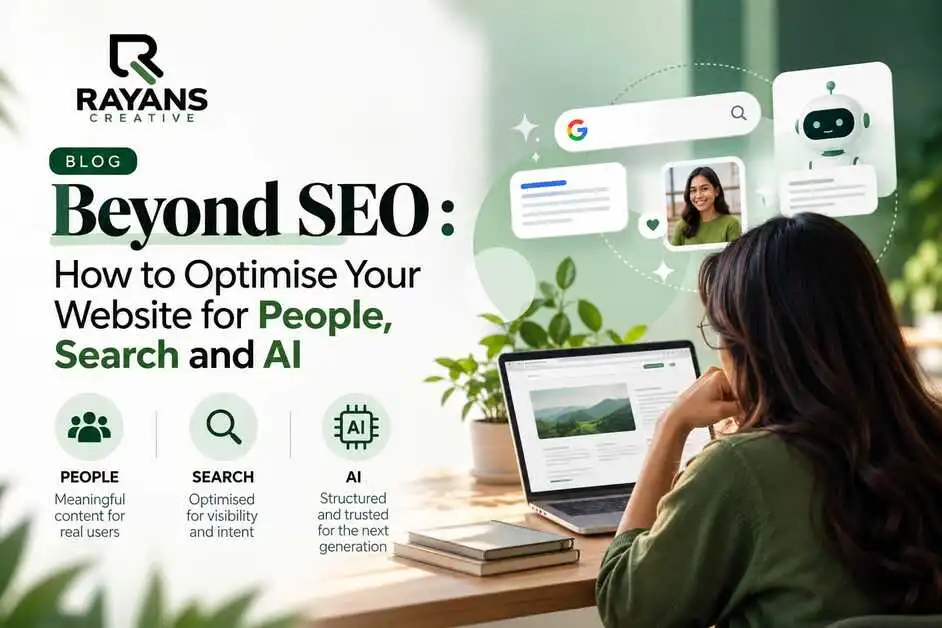
Search is changing. People do not look for businesses with the old Google search. They also use AI search, voice search, social media and local search to find information and businesses. For businesses just picking keywords is not enough. A good digital presence must help people help search engines and help AI systems, at once.
Why Businesses Need a Modern Search Strategy
Traditional SEO focuses on helping search engines discover and rank your website. But modern search requires more than rankings.
Your content should answer real questions, provide useful information and be structured clearly enough for both search engines and AI systems to understand.
| Focus | What matters | Business benefits |
|---|---|---|
| people | Useful content,easy navigation and good UX | Builds trust and conversions |
| search engines | SEO,keywords,technical structure and links | improves organic visibility |
| AI search | Clear answers,context and trustworthy information | Increases chances of being understood and referenced, |
The goal is not to create separate content for each one. It is to create high-quality content that works across all three.
1. Create Content for Real People
Start with the audience, than keywords. Think about what the customers want to know. For example:
- What does the service include?
- How much does it cost?
- How can the service help my business?
- How long will it take?
- Why should I choose this company?
Answering these questions clearly makes the content more useful. Helps the customers make decisions.
2. Make Your Website Search-Friendly
SEO fundamentals are still important.
Businesses should focus on:
- keywords and search intent
- Optimized page titles and headings
- Internal linking
- Mobile-friendly design
- Fast-loading pages
- Crawlable and indexable content
- Descriptive image alt text
- Clean website structure
Good SEO makes it easier for search engines to understand what your website offers.
3. Structure Content for AI Search
AI-powered search systems require an understanding of the meaning and context of your content.
A good way to optimize your content for search is by creating clearly structured documents.
- Use question-based headings
- short answers
- bullet points
- tables
- topic-based sections
- relevant internal links
- and provide accurate, trustworthy information.
For example, use questions like “What is SEO?” or “How long does SEO take?” as headings for sections instead of a generic “SEO.” This will help both users and search systems navigate and understand your content better.
4. Focus on Search Intent
| Intent | Example search | suitable content |
|---|---|---|
| Informational | What is SEO? | Blog/Guide |
| commercial | best SEO agency in kannur | Comparison/service page |
| Transactional | Hire an SEO agency | Service/contact page |
| Navigational | Rayans Creative | Brand/homepage |
5. Build Trust With Useful Information
AI and search engines can analyze vast amounts of content. Generic content will not give a business an advantage.
Value is brought via:
- Case studies
- Original insights
- Client examples
- Statistics
- Industry experience
- Testimonials
- Author information
The inclusion of reliable sources
For example, an analysis of how a particular campaign was designed and executed has more value than a generic statement such as “We deliver excellent marketing results.”
6. Don't Ignore Local SEO
For businesses targeting a specific location, local SEO is important.
A strong local strategy may include:
- Google Business Profile optimisation
- location-focused service pages
- local keywords
- customer reviews
- local citations
- relevant local content
- consistent business information
However, local SEO should not just be the same page, with the city name changed. Each location page should provide genuinely useful and locally relevant information.
Final Thoughts
SEO is no longer just about ranking for keywords.
Businesses need to create digital content that people find useful, search engines can understand and AI systems can interpret.
By combining strong SEO fundamentals with helpful content, good user experience, clear structure, local relevance and trustworthy information, businesses can build a stronger and more future-ready online presence.
Frequently Asked Questions
1. Why should businesses optimise content for AI search?
AI-powered search is changing how people discover information. Clear, useful and well-structured content gives AI systems better context about a business and its expertise.
2. Is traditional SEO still important for AI search?
Yes. Technical SEO, quality content, website structure, internal linking and search intent remain important foundations for online visibility.
3. What is the difference between SEO, AEO and GEO?
SEO focuses on search engine visibility, AEO focuses on providing direct answers to questions, and GEO focuses on visibility and understanding within generative AI search experiences.
4. How can a website become more AI-friendly?
Use clear headings, direct answers, structured content, relevant internal links and reliable information. Avoid unnecessary keyword stuffing and poorly structured content.
5. Does AI search mean businesses no longer need SEO?
No. SEO remains an important foundation. The difference is that businesses should now think beyond rankings and create content that is useful across multiple search experiences.
6. Why is user experience important for SEO?
A website that is easy to navigate, fast, mobile-friendly and useful provides a better experience for visitors and supports overall search performance.