
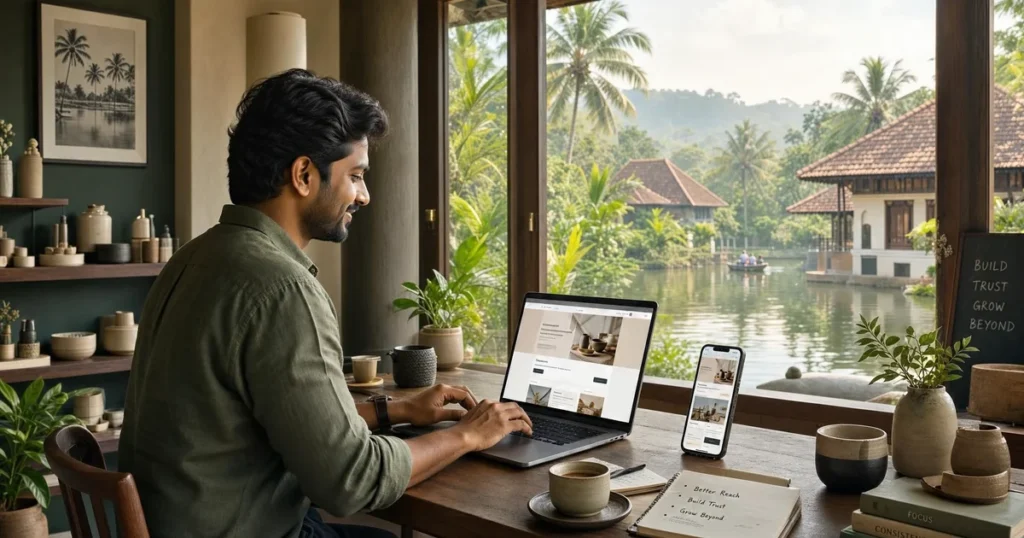
For many small businesses in Kerala, the first place potential customers look for information is online. They may discover a business through Google Search, Google Maps, social media or a recommendation. When they want to know more, a professional website gives them one reliable place to understand the business, explore its services and decide how to get in touch.
Social media is useful for visibility and conversations, but it does not replace a website that the business owns and controls. A well-planned website can support credibility, search visibility and customer enquiries while working alongside social media and other marketing channels.
1. Build trust with a professional online presence
A website often creates a customer’s first detailed impression of a business. A clear layout, consistent branding, accurate contact information, service details and genuine project examples help visitors understand who they are dealing with.
For service providers, retailers and local businesses, useful information matters more than decorative effects. Explain what you offer, who you serve, where you operate and how customers can contact you. Add real photographs, testimonials or case studies only when they are accurate and approved for publication.
2. Your website gives your business a home beyond social media
Social platforms can help businesses reach audiences, share updates and build relationships. However, the platform controls its features, reach and presentation. A website gives you more control over your brand experience, page structure, content and customer journey.
You do not need to choose between a website and social media. Use social channels to attract attention and guide interested people to relevant pages on your website, where they can find complete information or make an enquiry.
3. Help customers find your services through SEO
Search engine optimisation (SEO) helps search engines understand your pages and helps people find relevant information. A search-friendly website should use descriptive page titles, useful headings, clear service pages, descriptive URLs and content that answers real customer questions.
For a business serving customers in Kerala, location information should be accurate and consistent. Mention the areas you genuinely serve, provide correct contact details and create helpful location-specific content where it adds value. Avoid repeating location keywords unnaturally or creating pages for places you do not serve.
4. Make the experience work well on mobile
Many visitors will open your website on a smartphone. They should be able to read the content without zooming, navigate comfortably, view images properly and reach important actions without unnecessary effort.
A mobile-friendly website needs more than a layout that simply shrinks to fit a smaller screen. Buttons should be easy to tap, text should remain readable, forms should be simple and important information should be easy to find. The design should also work across tablets, laptops and larger desktop screens.
5. Improve speed and usability
A slow or confusing website can make it harder for visitors to find what they need. Good performance starts with a clean structure, appropriately sized images, reliable hosting and careful use of plugins, scripts and animations.
Usability is equally important. Organise services logically, use clear navigation, write concise content and make contact options visible. Every page should help visitors understand the next useful step rather than forcing them to search for it.
6. Turn website visits into genuine enquiries
A business website should make it easy for an interested visitor to take action. Depending on the business, that action could be calling, sending an enquiry, requesting a quotation, booking an appointment or visiting a shop.
Use clear calls to action and place them where they make sense in the visitor journey. Keep forms focused on the information you actually need, explain what happens after submission and test every contact method before the website goes live.
7. Choose a website that can grow with your business
Your website should reflect your current needs without making future improvements unnecessarily difficult. Before development begins, identify your key services, target customers, required pages, content needs and expected actions.
A content management system such as WordPress can make routine content updates manageable. The right setup depends on the project, so consider maintainability, security, backups, performance and the skills available to manage the website after launch.
What should a small business website include?
- Home: A clear introduction to the business and its main services.
- About: Relevant background, expertise and business information.
- Services or products: Useful details that help customers understand what is offered.
- Contact: Accurate phone, email, location and enquiry options.
- Portfolio or testimonials: Genuine examples and customer feedback, where available.
- Privacy information: A suitable privacy policy explaining how submitted information is handled.
How to get started
Start with the goal of the website, not just its appearance. Decide whether you need more enquiries, product discovery, appointment requests or stronger brand credibility. Gather accurate business information, service descriptions, photographs and contact details. Then plan the page structure, design, development, SEO basics and testing before launch.
Final thoughts
A professional website is not simply an online brochure. When it is planned around customer needs, built for mobile use, structured for search and maintained properly, it can become a valuable part of a small business’s digital presence.
At Rayans Creative, we help businesses build purposeful digital experiences through website design and development. If you are planning a new website or looking to improve an existing one, get in touch with our team to discuss your requirements.
Have a Project in Mind?
Bring your next business idea forward with the right mix of strategy, creativity and digital execution. Let’s discuss what your business needs.